
America and Iran on the Brink of War: Why the World Is on Alert
America and Iran on the Brink of War: What’s Really Happening?
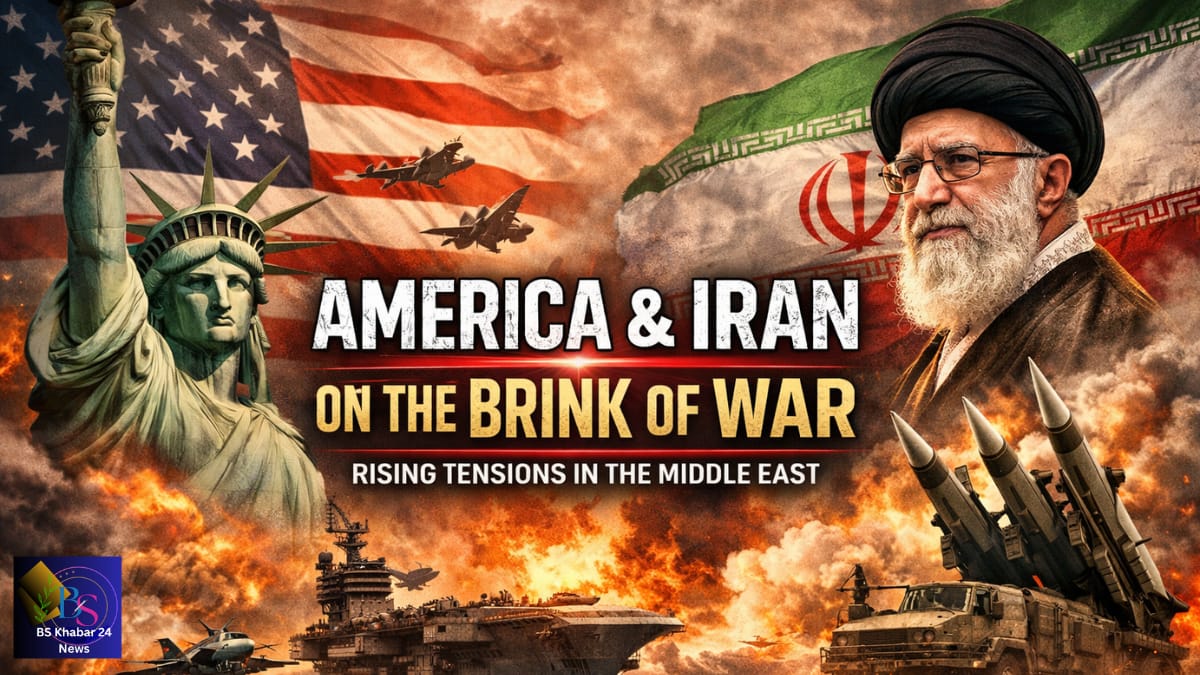
Tensions between the United States and Iran have surged to levels not seen in years — and the world is watching nervously as two powerful nations appear closer than ever to direct confrontation. (America and Iran on the brink of war).
“America and Iran are on the brink of war.” There are currently no signs that the risk of war is decreasing, as Trump and Khamenei are engaged in a dialogue of threats and counter-threats.
At the center of this standoff is a mix of aggressive military posturing, domestic unrest in Iran, and high-stakes diplomacy that has so far failed to ease fears of war. While neither side has yet fired the first shot in a full-blown conflict, recent developments suggest that the region is at a dangerous inflection point.
America and Iran on the brink of war
In early 2026, the United States dramatically increased its military footprint in the Middle East. A U.S. aircraft carrier strike group — led by the USS Abraham Lincoln — along with destroyers and other warships, has been deployed toward the Persian Gulf. The official U.S. stance is that this buildup serves as a deterrent against instability and a signal that Washington is prepared to act if necessary(America Iran brink of war).
The Trump administration has been especially vocal, warning that if Iran does not curb certain behaviors — particularly its suppression of internal protests and nuclear ambitions — military options remain on the table.
Iran’s Bold Response
Tehran, for its part, has pushed back hard. Supreme Leader Ayatollah Ali Khamenei issued stark warnings that any U.S. military strike would not just be a localized confrontation, but could ignite a regional war across the Middle East. He emphasized that Iran does not seek conflict, yet will respond aggressively to any attack on its territory or interests.
Iranian leaders have gone further, categorizing any foreign attack as an “all-out war.” Iranian officials have also openly discussed their military readiness and capabilities — including missile deployments and defensive drills near strategic waterways like the Strait of Hormuz.
Domestic Turmoil Adds Fuel to the Fire
Adding another layer to this volatile situation is Iran’s internal unrest. Since late 2025, widespread protests have shaken the country, sparked by economic hardships and evolving into broader demands for political change. The Iranian government’s crackdown has been both brutal and internationally condemned, with conflicting reports on the number of casualties.
Washington has repeatedly condemned Tehran’s human rights abuses, making them part of its broader criticism. This has only deepened Iranian perceptions of external aggression and interference — a view Tehran has used to justify its defensive posture.
Diplomacy Still Alive — But Fragile
Despite the alarm and rhetoric, there are still faint diplomatic threads between the two nations. Iranian officials have stated they are open to a “fair and equitable” negotiation that respects Tehran’s rights and security concerns, but have strongly opposed negotiating under military threat.
Both Washington and Tehran have signaled that some form of conversation is ongoing, though specifics remain unclear, and there is wide skepticism on both sides about true intentions. Regional players like Turkey have even offered to mediate, suggesting international concern about a possible wider conflict.
Nonetheless, any diplomatic progress is fragile. Talk of negotiation coexists with talk of war — and stark warnings from leaders on both sides make compromise increasingly difficult.
What Would a US–Iran War Mean?
A direct confrontation between the United States and Iran wouldn’t be just another regional skirmish — it would ripple far beyond the Middle East.
- Global Oil Markets: Iran controls key shipping routes like the Strait of Hormuz. Disruption here could trigger a sharp rise in global oil prices, affecting everything from fuel costs to inflation worldwide.
- Regional Alliances at Risk: Countries across the Middle East would be drawn in, aligning with one side or another. Nations already uneasy with U.S. foreign policy might recalibrate their strategies, while others could face security dilemmas of their own.
- Human Cost: The potential for loss of life — both military and civilian — is grave. Cruz-regional militias and allied groups could escalate conflict zones in Iraq, Syria and beyond, further destabilizing the region.
- Political Backlash in the U.S.: According to commentary circulating in U.S. public discourse, many Americans are wary of fresh military entanglements after decades of Middle East involvement, which could make broad public support for war tenuous.
What Comes Next?
At the time of writing, both the United States and Iran appear locked in a precarious balance between confrontation and conversation.
War is not inevitable, but hope for de-escalation seems equally fragile. Whether cooler heads prevail in diplomacy or tempers continue to flare with military deployments and public threats will likely shape not just Middle Eastern geopolitics but global economic and security landscapes in 2026 and beyond.
For now, the world watches — wary of conflict, and hopeful for peace.


