
Political Meme Controversy 2026: Viral Video Sparks Global Outrage and Debate
Political Meme Controversy 2026: When Online Humor Sparks Global Debate
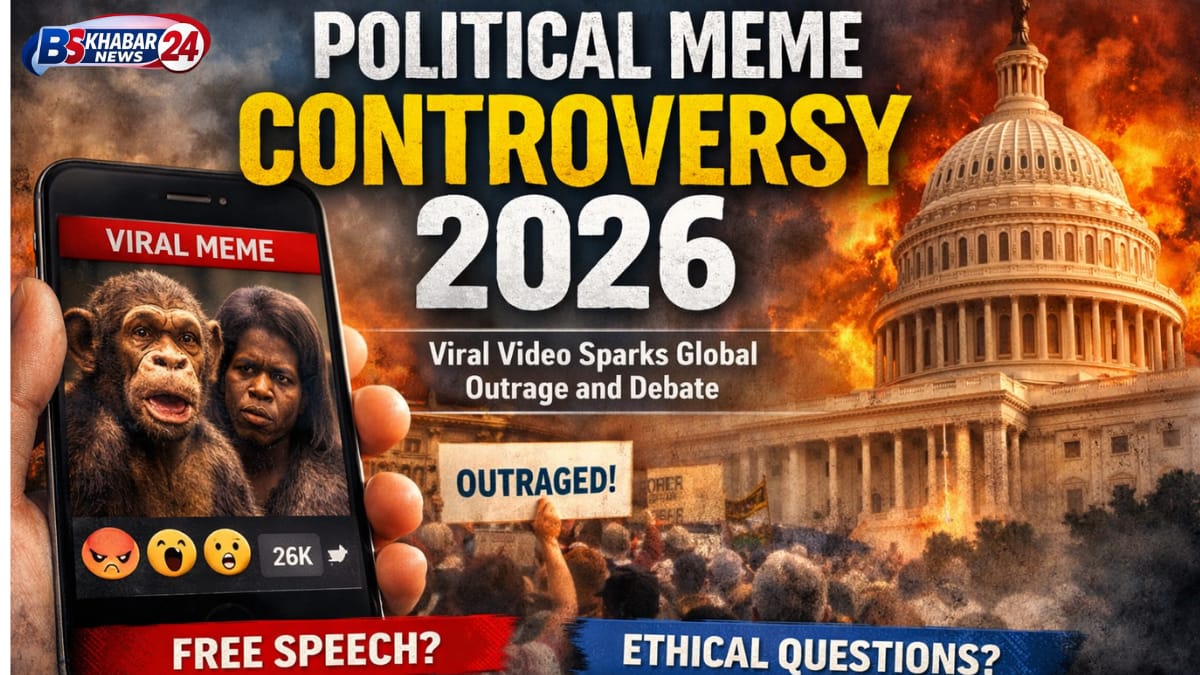
The Political meme controversy 2026 has once again highlighted how powerful — and dangerous — digital humor can be in today’s hyperconnected world. What begins as a short video, image, or joke shared online can quickly explode into a full-scale political debate, raising serious questions about ethics, racism, free speech, and the responsibility of public figures in the digital age.
In 2026, political memes are no longer harmless internet jokes. They shape public opinion, influence voters, and sometimes deepen social divisions. Let’s discuss this in detail.
How the Controversy Began
The latest political meme controversy erupted after a viral video meme, allegedly shared by a high-profile political figure, circulated widely on social media platforms. The meme portrayed prominent political personalities in a way many critics described as offensive and dehumanizing. Within hours, hashtags related to the Political meme controversy 2026 began trending globally on X (formerly Twitter), Instagram, and Facebook.
While supporters defended the meme as “satire” or “dark humor,” critics argued it crossed a clear moral line. Civil rights groups, journalists, and political commentators quickly weighed in, turning the meme into an international talking point.
Why Political Memes Are So Powerful in 2026
Memes work because they are:
- Short and emotionally charged
- Easy to share
- Designed for instant reactions
In 2026, social media algorithms reward content that sparks outrage or laughter — often both. Political memes thrive in this environment, reaching millions faster than traditional news articles ever could.
The Political meme controversy 2026 shows how a single piece of digital content can overshadow policy discussions and dominate news cycles, even when it contains no factual information.
Free Speech vs. Ethical Responsibility
One of the biggest debates surrounding the political meme controversy is the balance between free speech and ethical responsibility.
Supporters argue:
- Memes are a form of political expression
- Satire has always been part of democracy
- Censorship sets a dangerous precedent
Critics counter that:
- Dehumanizing imagery promotes hate
- Public figures must meet higher standards
- Online “jokes” can reinforce harmful stereotypes
This clash of viewpoints has reignited global conversations about what limits, if any, should exist in political online content.
Reactions from Political Leaders and the Public
Reactions to the Political meme controversy 2026 have been sharply divided. Some political leaders condemned the meme outright, calling for respect and dignity in political discourse. Others remained silent or downplayed the issue, further fueling criticism.
Public response has been equally polarized. While many users expressed outrage and demanded accountability, others shared the meme repeatedly, arguing that outrage culture itself is the real problem.
This divide reflects a broader trend in global politics — one where digital narratives often matter more than real-world consequences.
The Role of Social Media Platforms
Social media companies now face renewed pressure to act. In 2026, platforms claim to enforce stricter content moderation policies, yet controversial political memes continue to spread rapidly before any action is taken.
Experts say platforms benefit from viral controversies, even when they later remove the content. The Political meme controversy 2026 has once again raised questions about whether tech companies are doing enough — or if profit still outweighs responsibility.
Impact on Political Discourse and Elections
Beyond outrage, political meme controversies have real consequences. Analysts warn that repeated exposure to offensive or misleading memes can:
- Normalize extreme views
- Distract voters from policy issues
- Undermine trust in democratic institutions
With several major elections approaching worldwide, the timing of the Political meme controversy 2026 is especially sensitive. Digital strategists believe such controversies may increasingly be used intentionally to provoke reactions and dominate media attention.
What This Means Going Forward
The political meme controversy of 2026 is not an isolated incident. It is part of a growing pattern where online culture and politics collide with unpredictable results.
As memes continue to evolve as political tools, the responsibility lies with:
- Political leaders to act responsibly
- Platforms to enforce clear standards
- Audiences to think critically before sharing
The controversy serves as a reminder that in the digital era, even a “joke” can shape history.


